Thalidomide disaster

Incident that laid the foundation of Pharmacovigilance

In 1957, a drug was marketed as a safe sedative by a German company. They advertised their product as “completely safe” for everyone, including mother and child, “even during pregnancy,” as its developers “could not find a dose high enough to kill a rat.” By 1960, it was marketed in 46 countries, with sales nearly matching those of aspirin.


Around this time, Australian obstetrician  Dr. William McBride discovered that the drug also alleviated morning sickness. He started recommending this OFF-LABEL use of the drug to his pregnant patients, setting a worldwide trend.


In 1961, a lot of reports about birth defects started coming in from all over the world. As Dr. McBride dug deeper, he began to associate this so-called harmless drug with severe birth defects in the babies he delivered. The drug interfered with the babies’ normal development, causing many of them to be born with phocomelia, resulting in shortened, absent, or flipper-like limbs.

What followed was the biggest man‐made medical disaster ever, where numberless miscarriages happened and over 10,000 children were born with a range of severe and debilitating malformations.
.
Can you guess the drug?

Yes, the drug is thalidomide. A drug that caused the biggest man-made disaster where more than 10,000 children were born with deformities all over the world.

But do you know the tragedy was largely averted in United States – thanks to FDA inspector Frances Kelsey, who prevented the drug’s approval within the United States despite pressure from the pharmaceutical company and FDA?

-The application for thalidomide contained incomplete and insufficient data on its safety and effectiveness.
-The lack of data indicating whether the drug could cross the placenta, which provides nourishment to a developing fetus.
-There were not yet any results available from U.S. clinical trials of the drug. Even if these data were available, they may not have been entirely reliable as then clinical trials did not require FDA approval. The trial in US involved distribution of 2.5 m tablets to 20000 patients but the results and AEs were not tracked by physicians.

Due to her stand, the tragedy was largely averted, and she subsequently was given a distinguished service award by President JFK.

The tragedy and crisis laid the foundation of present-day Pharmacovigilance.

Thalidomide was banned in most countries by March 1962.

The book “The power of habit” talks about the “power of crisis”:

Great leaders make crisis in a business/ process an opportunity for bringing in transformational changes in the organization.

The crisis in drug safety led to strict legislations- that immediately followed the Thalidomide disaster and laid the foundation of PV:

– The whole regulatory system was re-shaped in the UK where a Committee on the Safety of Drugs (CSD) was started in 1963 followed by a voluntary adverse drug reaction reporting system(Yellow Card Scheme) in 1964.

– In the United States, the Drug Amendments Act of 1962 was passed by Congress requiring the FDA to approve all new drug applications (NDA) and, for the first time, demanded that a new drug should be proven to be effective and safe. Of equal importance, the FDA was also given the authority to require compliance with current Good Manufacturing Practices (GMP), to officially register drug establishments and implement other requirements. The EEC Directive 65/65/EEC on the approximation of provisions laid down by law, regulation and administrative action relating to medicinal products was also induced by the thalidomide disaster.

In 1965, Thalidomide was re-marketed in several countries for erythema nodosum leprosum (ENL) and cases of thalidomide deformities have re-emerged.


This is specially in Brazil where leprosy cases are maximum, and the drug is used widely.

Schuler-Faccini and other researchers from the Universidade Federal do Rio Grande do Sul in Porto Alegre looked at the birth records of 17.5 million babies born between 2005 and 2010.
They looked at all children with limb defects and those with the characteristic defects of Thalidomide and compared the distribution of Thalidomide tablet with the number of limb defects and found a direct correlation.

“The bigger the amount of pills in each state the higher the number of limb defects.”

In the same 2005-2010 period, 5.8 million Thalidomide pills were distributed across Brazil and about 100 known cases were reported in these six years similar to Thalidomide syndrome.

Several thalidomide babies continue to be born each year!


Between 2015 and 2018, 5 new cases of use of thalidomide during pregnancies were reported to the Mohr and ANVISA.
Reason?

Regulatory insufficiency, self-medication, and widespread use under inadequate supervision.

Are we learning from our errors?

References:

  1. Northwestern Unitvesity research center, accessed 21 May 2021, <https://helix.northwestern.edu/article/thalidomide-tragedy-lessons-drug-safety-and-regulation>
  • BBC, accessed 21 May 2021, <https://www.bbc.com/news/magazine-23418102>
patient safety first

Have you watched Dr. House?

I have been a big fan. Not only for the amazing Dr. Gregory House, and the story line but because this series gives you a glimpse of the struggles, challenges and beauty of medical profession. And also, the series educates on so many relevant healthcare topics.

Why I talk about it today during our patient safety campaign? Because it was about 12 years ago when I first saw the Dr. House episode on “hospital-acquired infections” (HAI) with a mention on “antibiotic resistance”.

It is a very powerful story they tell, which has stayed with me for years. This episode not only educates you about the problem but also how due diligence and vigilance towards HAI saved from an epidemic in the hospital.

If you would like to watch it, do watch “Maternity”, episode 4, Season 1, Dr. House. Its available on Prime.

It will help bring some perspective if you are a non medic and would like to understand the patient safety topic “Hospital acquired infections” which is the Goal 5 given by NABH.

See an excerpt from the Maternity episode under the youtube link above

#PhVFITpatientsafetycampaign#healthcaresolutions

Patient safety research – how important?

If you are working on oncology studies, have you noticed that complete radical mastectomy is usually reported pre-1980 for breast cancer patients. Have you thought about the reason?

Radical mastectomy used to be a norm in America after Halsted first established the procedure in 1894. This Surgery entailed removal of breast, chest muscles, and all of the lymph nodes under the arm, and this was thought to be the only option to treat breast cancer. Halsted based his surgery on centrifugal theory. In Emperor of all maladies, Siddhartha Mukherjee explains this as – cancer like a malevolent pinwheel, tended to spread in ever-growing arcs from a single central focus in the body. A surgeon’s job was to arrest the centrifugal speed by cutting every piece of it out of the body, as if to catch and break the wheel in midspin. The more a surgeon cut, the more it cured. However, morbidity after the operation was great, because the large wounds were left to heal by granulation, lymphedema was near universal, and arm movement was severely restricted (due to pectoralis muscle removal and damage to axilla nerves). For these reasons, chronic pain was also an important sequela. 

Another oncologist Geofferey Keynes was not so convinced about Halsted’s theory. 1n 1924, from experience with his patients, he saw that a lumpectomy, a much less invasive procedure along with radiation, worked just as well but with much less morbidity. The relapse rates were almost equal as with Radical mastectomy but the quality of life for the patients was much better. He presented his data but his ideas were not taken seriously as the surgeons of that time were completely sold to the centrifugal theory. 

In 1953 (almost 30 years later), George Crile, a follower of Halsted theory started having his doubts about radical mastectomy. His research and studies revealed that the cancer spread was more erratic and unpredictable. The patients treated with radical mastectomy also relapsed and died due to metastasis. He came to understand that either the breast cancer is a highly localised disease – thus curable by a smaller mastectomy – or an inherently systemic disease – thus uncurable event by the most exhaustive surgery. He gave up radical mastectomy altogether and started following the Keynes’s procedure and saw that the survival rate of patients in the two surgeries had no difference. Separated by 40 years of clinical practice, both Keynes and Crile had seemingly stumbled on the same clinical truth.

However, it took another twenty years, and dedicated efforts and clinical trials by another great oncologist Bernard Fisher to establish the futility and danger of a complete radical mastectomy. It will also be interesting to note that the withdrawal of radical mastectomy was also sped up due to the thalidomide disaster in 1960s. Fallibilities in the medical discipline surfaced and patients recognized that one of the most common and disfiguring operations was never tested in a trial, women refused radical mastectomies. Clinical trials were conducted by Fisher to prove his findings! However, they were not without obstacles. It took him around 10 years to gather all data.

Meanwhile, more mutilating and invasive procedures liked extended radical mastectomy were also tried and abandoned due to high mortality rates! 

A radical mastectomy is rarely performed now and has been replaced by less invasive procedures. I wonder if medical fraternity at that time was more accepting of the new ideas and theories, would it have taken as much as almost a century to reach this decision?

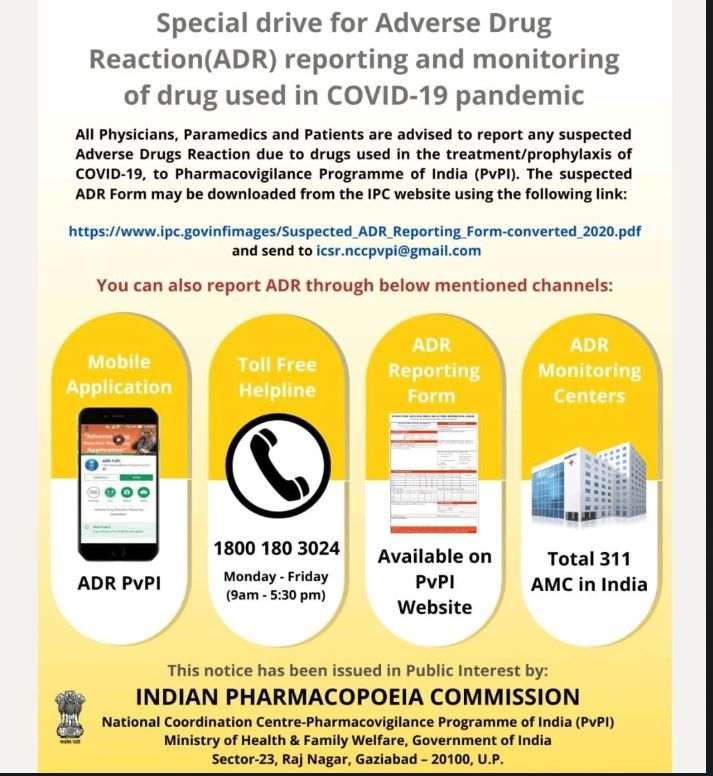
Are you reporting Adverse Events Following Immunisation with Covid Vaccine?

Effective #pharmacovigilance is only possible when we have data to assess and analyse.

Are we reporting, are HCPs reporting? I spoke to a friend whose whole family was vaccinated (Covishield), most in the family experienced high fever, severe body pain, injection site pain and swelling. Expected reactions, listed in the Serum Institute of India fact sheet. Lot of people under the age of 50 are experiencing these (atleast 10 cases that I heard).

Another reaction that one of his family members complained of was “Chest pain” for 2-3 days. This is not an expected reaction as per the SII fact sheet or product insert. I asked him if he had reported the reactions anywhere? He was confused – where and who to report?

So, I reported the reactions to SII and PvPI in an email, I received a response from SII with a vaccine AE reporting form to fill for further details on the drug and reactions. I made sure to fill as much details as possible (have been at the other end and know the frustration of having insufficient information).

Do you know when and where to report after the #covid19vaccine vaccination? If you don’t, here are some details:

The first person to report is your treating physician who should be reporting the AEs further.

Other ways to report see link below, and PvPI reporting information in the pic attached. You can also report on the helpline numbers provided at Cowin portal in the FAQs document for vaccination.

https://lnkd.in/dkYaUUd

5 Moments of Hand Hygeine to prevent Hospital acquired infections

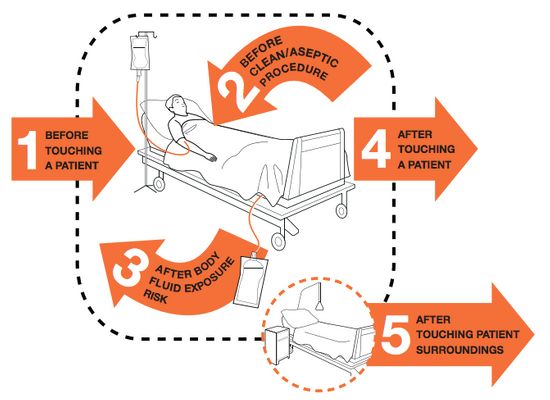
Indian Medical association (IMA) and WHO prescribes 5 Moments for Hand Hygiene for healthcare workers to prevent Hospital acquired infections:

IMA recommends health-care workers to clean their hands:

1. Before touching a patient
2. Before clean/aseptic procedures
3. After body fluid exposure/risk
4. After touching a patient, and
5. After touching patient surroundings

Hand hygiene is one of the simplest ways to avoid HAIs, it is however, often unconsciously missed/ ignored during the day to day working in hospitals.

How can patients help with this?

Simple awareness about these hand hygiene practices can make a big difference. Patients and attendants can remind the health care workers caring for the patients regarding these simple hand hygiene practices.

Patient safety needs concerted efforts from all stake holders, physicians, health care workers, patients, and care takers alike. Are you ready to take the lead?

picture source: https://lnkd.in/eU76Hgf

#patientcare #patientsafety

Why Pharmacovigilance?

Why is #Pharmacovigilance important? To achieve the Utopian goal of #patientsafety ??

Well, we can’t understand the real significance of PV awareness until we experience the benefit in our own lives. So here are two personal stories where knowledge of pharmacovigilance helped me and my family:

1. Few years ago, my aunt developed a severe dry cough. She consulted many ENT specialists, tried different therapies but it did not resolve. Few weeks into the incessant cough that would keep her awake all night, she consulted another physician. He reviewed her regular medications, which included one for hypertension. He switched that medication to another salt, and her cough resolved! She was probably on an ACE inhibitor earlier that caused the cough.

Thankfully, the physician was well aware of PV and side effects and zeroed-in on the cause and ended her weeks long coughing woes.

2. During my pregnancy, I started experiencing severe constipation. I was put on laxatives by the Gyne, but it was recurrent and troubled a lot. I reviewed my medications and noticed that iron supplements in general, and the brand of iron I was taking in particular is highly associated with this event. Now you can’t stop iron during pregnancy, so I consulted with my gyne and requested her to switch me to another brand. That she did and the issue resolved in no time.

Being trained in PV – the dechallenge had worked, so I decided to rechallenge (after a few days) to establish causality – I took the older brand again, and the event reappeared within a day – establishing direct causality! I finally stopped that brand for good, and the issue never returned.
Iron supplements are usually associated with constipation, but some formulations make it more pronounced.

Reporting every event matters, serious or non-serious! Had these non-serious events not been reported – they would never have been added to the SmPCs and package inserts, and the knowledge would not have been there.

Therefore, the purpose of PV awareness is not to scare people about medications, it is about learning to be vigilant and judicious in the way we take them, thus ensuring patient safety.

  • Arshia Bhandari